
A familiar theme can make a slot game feel easier to understand than it really is, but visual appeal does not change the mathematics. Anyone researching a golden century pokie should first identify the decisions that create avoidable losses, from confusing play money with cash stakes to overlooking the rules for symbols and features. This practical guide focuses on those mistakes so Australian adults can assess the game calmly, set sensible limits and avoid treating entertainment as a source of income.
Do not mistake a recognisable theme for a safer game
A common error is assuming that a straightforward, traditional-looking pokie is less risky than a modern game with elaborate graphics. The theme, soundtrack and symbols are presentation choices; they do not reduce the house edge or make individual spins more predictable. A simple interface can even encourage faster play because there are fewer distractions between one spin and the next.
Before wagering, separate what you know from what you are merely inferring. You may understand the basic objective, but still not know the game’s return-to-player figure, volatility, paytable, maximum win or feature conditions. Those details matter. A game with frequent small wins can still lose money over time, while a game with occasional larger wins may produce longer stretches without a return.
Another mistake is reading short-term results as evidence of a pattern. Five losing spins do not make a win “due”, and several winning spins do not signal that the machine is about to continue paying. Each spin is governed by the game’s random outcome system. Treat the session as paid entertainment with an uncertain cost, not as a puzzle that becomes easier after observing enough symbols.
Check the paytable before choosing a stake
Skipping the paytable is one of the most practical mistakes to avoid. It normally explains which symbols pay, whether wins must appear on particular lines or ways, and how bonus symbols operate. It may also show whether a wild substitutes for other symbols, whether scatters pay anywhere, and whether wins are multiplied during a feature.
Pay attention to the difference between a displayed coin value and the actual cash amount. Some games allow a player to select a denomination, number of lines or total bet per spin. A stake that appears small in credits can become meaningful when multiplied across many lines and repeated quickly. Write down the total amount per spin before starting, then calculate what 50 or 100 spins would cost if no meaningful return arrived.
Do not assume every symbol shown on the reels has the same role. A wild may substitute but not trigger a bonus; a scatter may trigger a feature but not help complete ordinary combinations. If the rules use unfamiliar terms, pause rather than guessing. Understanding the paytable will not improve the mathematical odds, but it prevents avoidable confusion about why a result did or did not pay.
Set limits before the first spin

Choosing a budget after a session has started is unreliable because losses can feel like a challenge to recover. Set both a money limit and a time limit while you are still calm. The money limit should be an amount you can lose without affecting rent, bills, food, savings or other commitments. Once it is gone, the session ends.
A useful approach is to divide the planned entertainment budget into smaller sessions rather than carrying the entire amount at once. For example, someone with a $60 discretionary limit might choose three separate $20 sessions, provided that the total remains fixed and no extra money is added. This does not improve the game’s odds; it simply creates clearer stopping points and reduces impulsive top-ups.
Pre-commitment works best when the limits are difficult to bypass. Turn off saved payment details where possible, avoid borrowing, and do not use money intended for another purpose. Set an alarm for the planned finishing time, particularly when playing at home or on a mobile device. If you feel angry, anxious or determined to win back losses, stop immediately instead of changing the rules mid-session.
Resist chasing losses and increasing stakes
Loss chasing usually begins with a reasonable-sounding thought: one larger wager might restore the session. The problem is that increasing the stake also increases the amount exposed to the same negative expectation. A losing run does not alter the probability of the next spin, so raising the bet because the game has been “cold” is not a recovery strategy.
Progressive staking systems can create the same trap. Doubling after a loss, for instance, may appear capable of recovering earlier losses after a win, but it requires increasingly large bets and assumes the player can continue indefinitely. Real budgets, maximum bet limits and long losing sequences make that assumption unsafe. A system for selecting stakes cannot turn random outcomes into dependable income.
Write down the session result when you finish, including deposits, withdrawals and playing time. This is more useful than relying on memory, especially if a few wins made the session feel better than it was financially. If gambling is becoming difficult to control, confidential support is available through Gambling Help Online. Seeking help early is a practical safeguard, not a sign of failure.
Review the game and platform separately
Another mistake is treating the game’s rules and the platform’s conditions as one thing. The game determines its symbols, features and mathematical structure, while the operator controls account rules, identity checks, payment processes, limits and access. Reading one does not confirm the other. Availability and terms can also vary, so avoid relying on an old description or another person’s experience.
Before depositing, check the currency, minimum and maximum stakes, withdrawal conditions and any restrictions that apply to your account. Do not assume that a promotional offer, if displayed, is automatically good value. Wagering requirements, expiry dates and excluded games can make an offer unsuitable for your budget. If important terms are unclear, do not deposit until you have obtained a clear answer from the relevant operator.
Finally, treat free-play results as practice rather than evidence. A demonstration mode can help you learn the controls and paytable, but it does not prove that real-money play will produce similar results. Keep screenshots or notes of rules you want to review, use strong account security and monitor transaction records. The safest decision may be to stop researching once you realise the game does not fit your planned budget or boundaries.
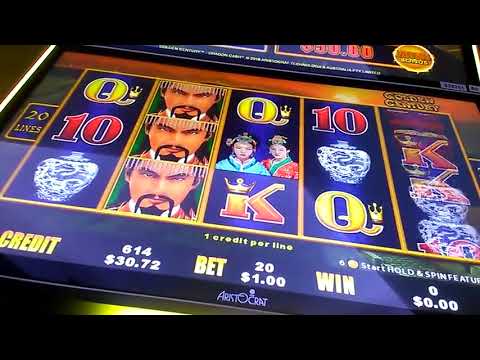
Questions players often ask about Golden Century pokies
Does a losing streak mean the next spin is more likely to win?
No. Previous outcomes do not normally change the probability of the next independently generated result. A losing streak may feel unusual, but it is not evidence that a win is owed. Continuing or increasing the stake to exploit that belief can turn a disappointing session into a much larger loss.
Is a higher stake more likely to produce a winning combination?
A higher stake may change the value of a winning combination and, depending on the game’s configuration, the number of lines covered. It does not make random outcomes a reliable source of profit. Check the paytable and total bet settings, then choose only an amount that fits your predetermined entertainment budget.
What should I do if I keep trying to recover losses?
Stop playing, avoid adding funds and take a break away from gambling access. Tell someone you trust what is happening and review your bank and account limits. If stopping feels difficult, contact a gambling support service for confidential guidance. Early support can help prevent financial stress from becoming more serious.